
Siding Repair or Replacement? How to Tell What Your Home Needs
Most Siding Problems Start Small
A cracked panel behind the downspout. A soft spot near the garage. A section that has faded three shades lighter than the rest of the house. None of it looks urgent, so it waits. Then a year goes by, and the question stops being whether to fix that one panel and starts being whether the whole wall needs to come off.
That is the decision most homeowners are actually trying to make, and it is a harder call than it looks from the ground. The honest answer depends on how far the damage has traveled, what is happening underneath the panels, and how much life the rest of the siding has left. Here is how we work through it on a siding job in Bergen County, and what you can check yourself before anyone comes out.
Get a Free Siding Estimate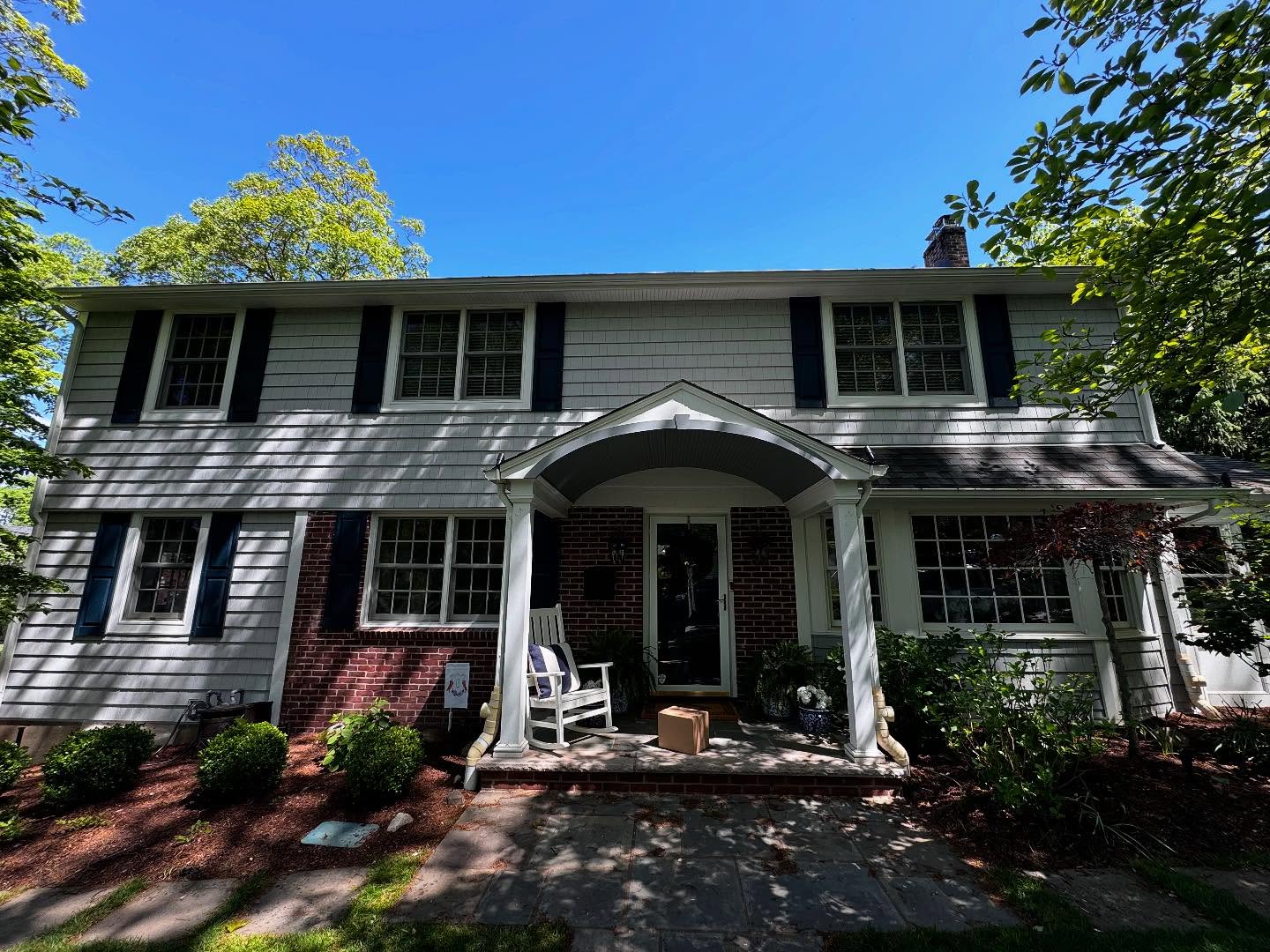
Five Things That Decide Repair or Replacement
There is no square-footage rule and no age cutoff that settles this. What settles it is the answer to five questions, and you can start answering most of them from your own driveway.
What Siding Damage Actually Looks Like
Walk the perimeter of your house on an overcast day, when there is no glare to hide anything, and look at the wall from an angle rather than straight on. You are looking for panels that bow or ripple, seams that have pulled apart, and any spot where the siding has separated from the trim. Push gently on anything that looks off. Siding should feel firm. If it gives, or if you hear a soft crunch, the sheathing behind it has taken on water.
Then look at the inside of the house. Paint that bubbles on an exterior wall, a musty smell in a closet that shares that wall, or a rising heating bill with no other explanation all point at the same place. Those signs matter more than anything you can see from outside, because they mean the water has already made it past the barrier. If you find them, it is worth having someone look before the weather turns.
"Quick response and so helpful! Helped me plan a timeline of projects for future maintenance of my roof and gutters."
See our profile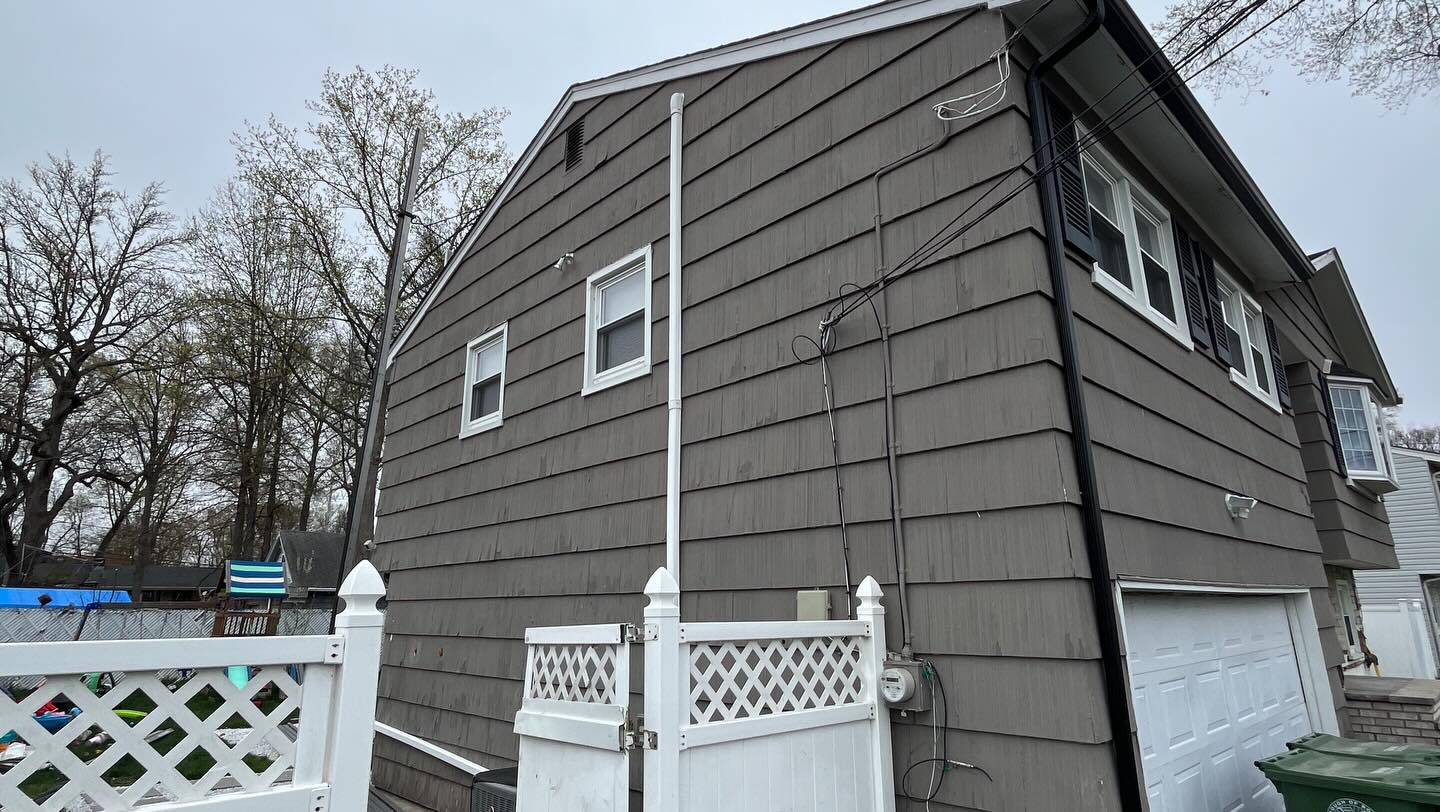
When a Repair Is the Right Call
Repair is the better answer more often than people expect. If the damage is contained to one elevation or a handful of panels, if the sheathing underneath is dry and solid, and if the rest of the siding still has real life in it, there is no reason to tear off three walls that are doing their job. A targeted repair costs a fraction of a full replacement and takes a fraction of the time.
The catch is matching. Siding fades, and a panel pulled from a box today will not match a wall that has been in the sun for fifteen years. Sometimes we can pull replacement panels from a less visible elevation and put the new material there instead, which keeps the front of the house consistent. If your original profile has been discontinued and no close match exists, that changes the math, and we will tell you so rather than install something that will always look like a patch.
"Knowledgeable and friendly. Came quickly to repair roof issue."
See our profileWhen Replacing Costs You Less
Replacement wins when the damage is not really about the panels. If we open a wall and find wet sheathing across more than one bay, the siding was only the visible end of a problem that has been running for a while. Patching over it buys a season and costs you the repair twice. The same is true when damage shows up on three or four elevations at once, because that usually means the material has reached the end of its service life everywhere and the failures are just arriving at different speeds.
There is a simpler version of the test. Add up what you have spent on siding repairs over the last three years. If that number is climbing, and if a full replacement would come in at less than roughly three times your last repair bill, replacing is the cheaper decision on any timeline longer than a couple of years. We will give you both numbers so you can run that comparison yourself. If you are outside Bergen County, we handle siding work in Morris County as well.
"Easy to work with. Finished the job within the time frame they said they would. Price was good. Very thorough cleanup."
See our profile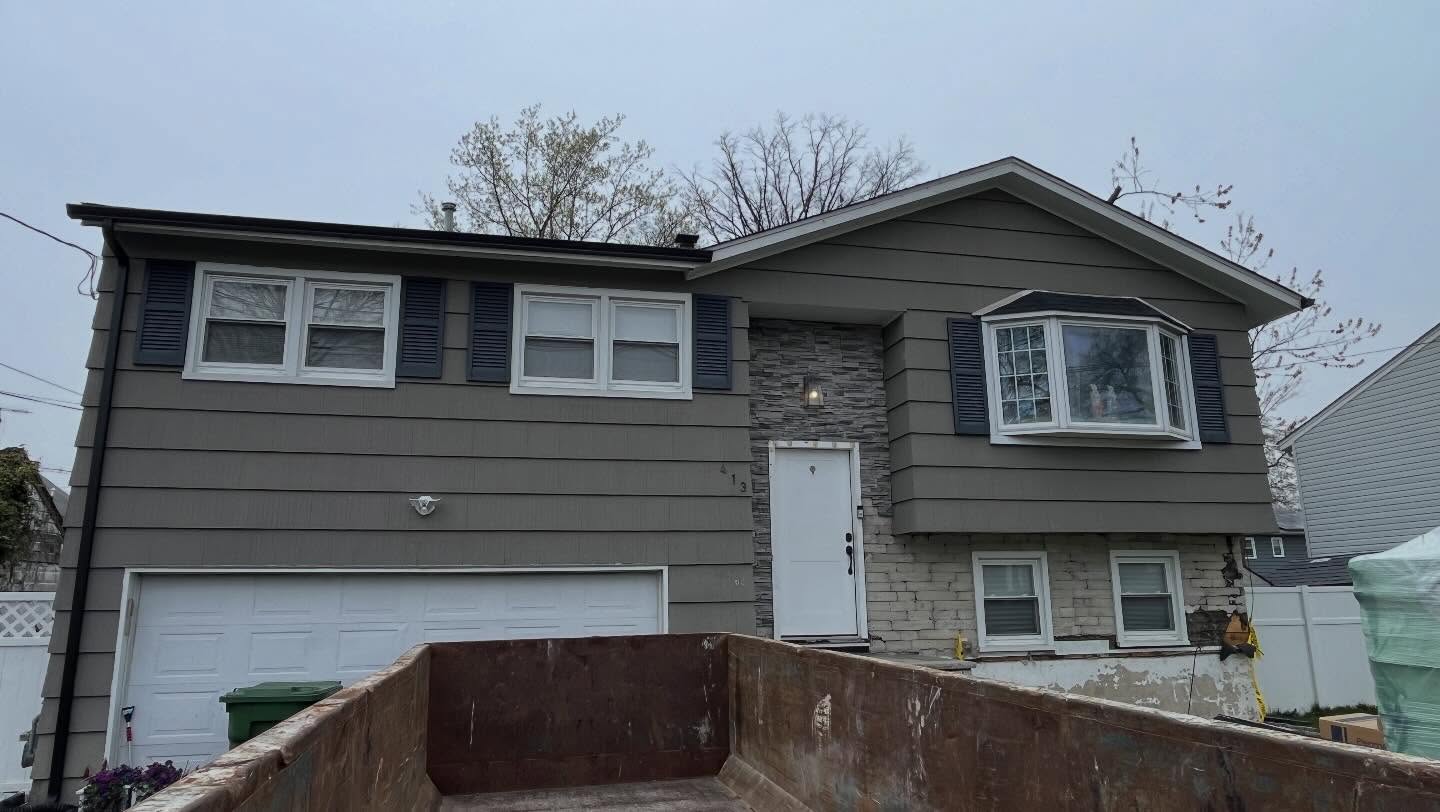
What New Jersey Weather Does to Siding
Northern New Jersey is hard on exterior materials for one specific reason: we cross the freezing line constantly. A single February week here can run through a dozen freeze-thaw cycles. Water that worked its way behind a panel in the afternoon expands overnight and pushes the seam a little wider, and the next thaw lets more water in through the gap it just made. That cycle is what turns a hairline crack into a failed wall, and it works on a schedule that has nothing to do with how old the siding is.
Summer does its own damage from the other direction. Heat expands vinyl and aluminum, which loosens fasteners over time, and full sun on a south or west elevation fades and embrittles panels years faster than the shaded sides of the same house. This is why siding almost never wears out evenly here, and why the south wall failing does not automatically mean the north wall is finished. It also explains why so much siding damage shows up right below a gutter that has been overflowing. If your gutters are running over the front edge, getting them corrected protects whatever siding decision you make next.
"This company is the best…in promptness, workmanship, and fair prices."
See our profileSiding Work Around Bergen County
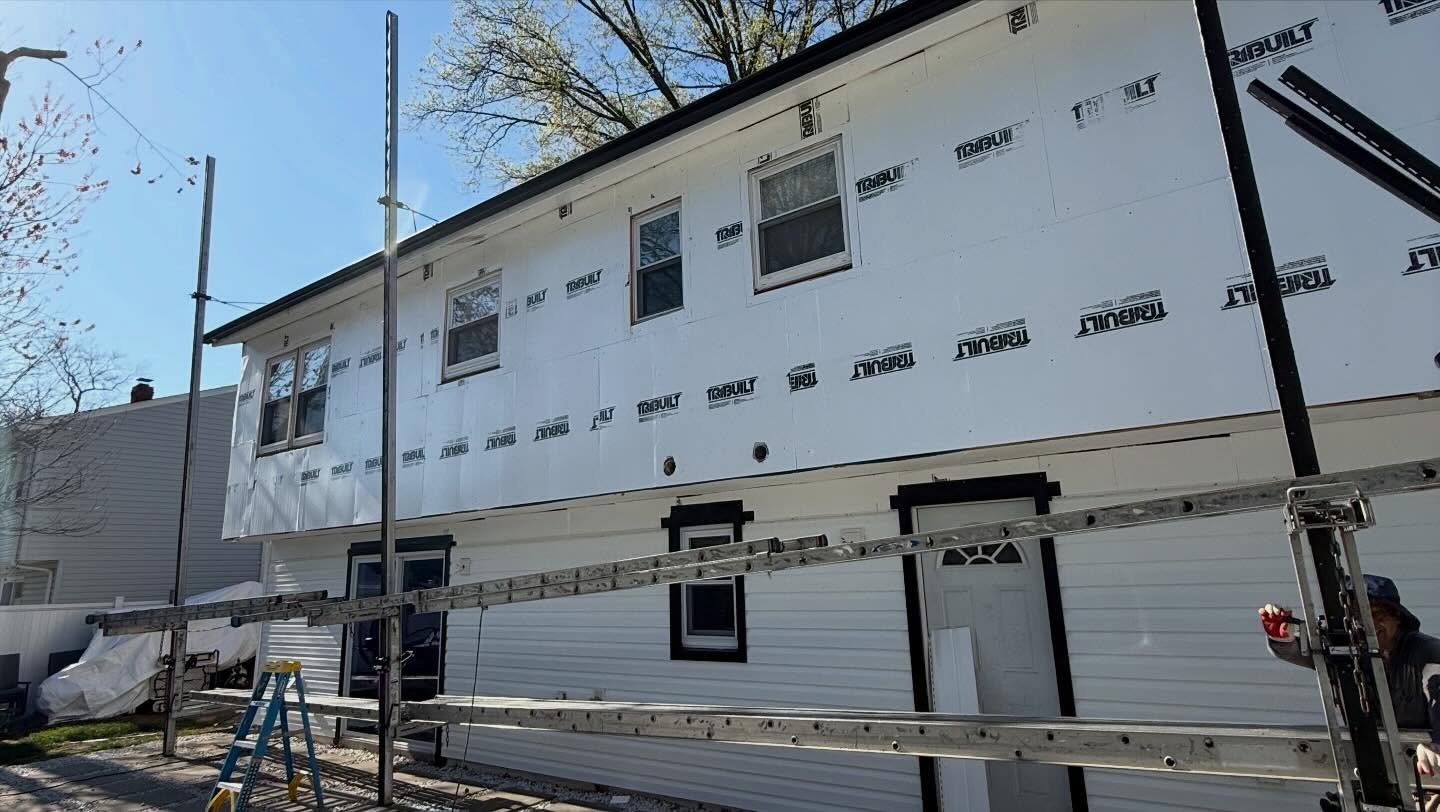
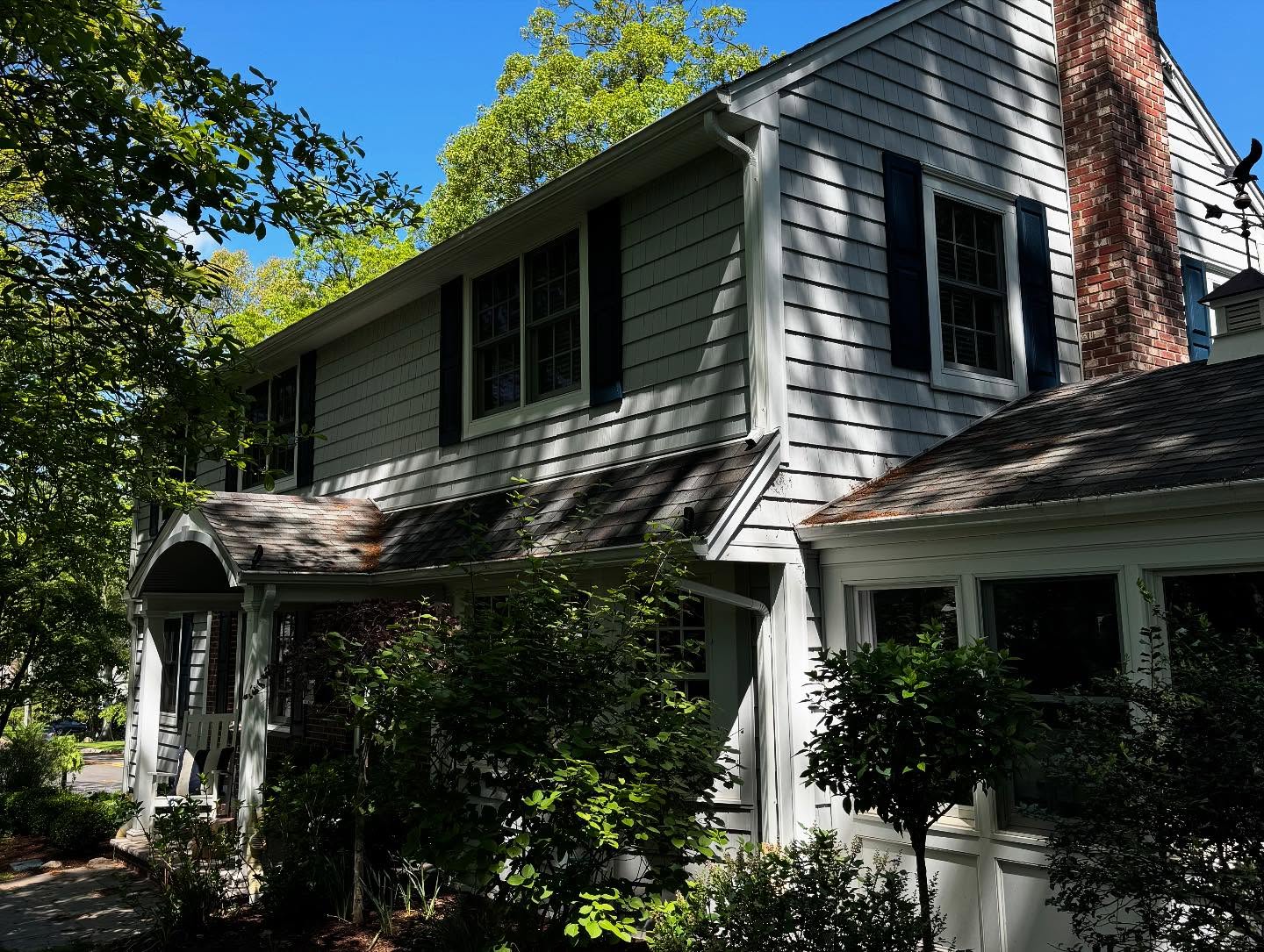
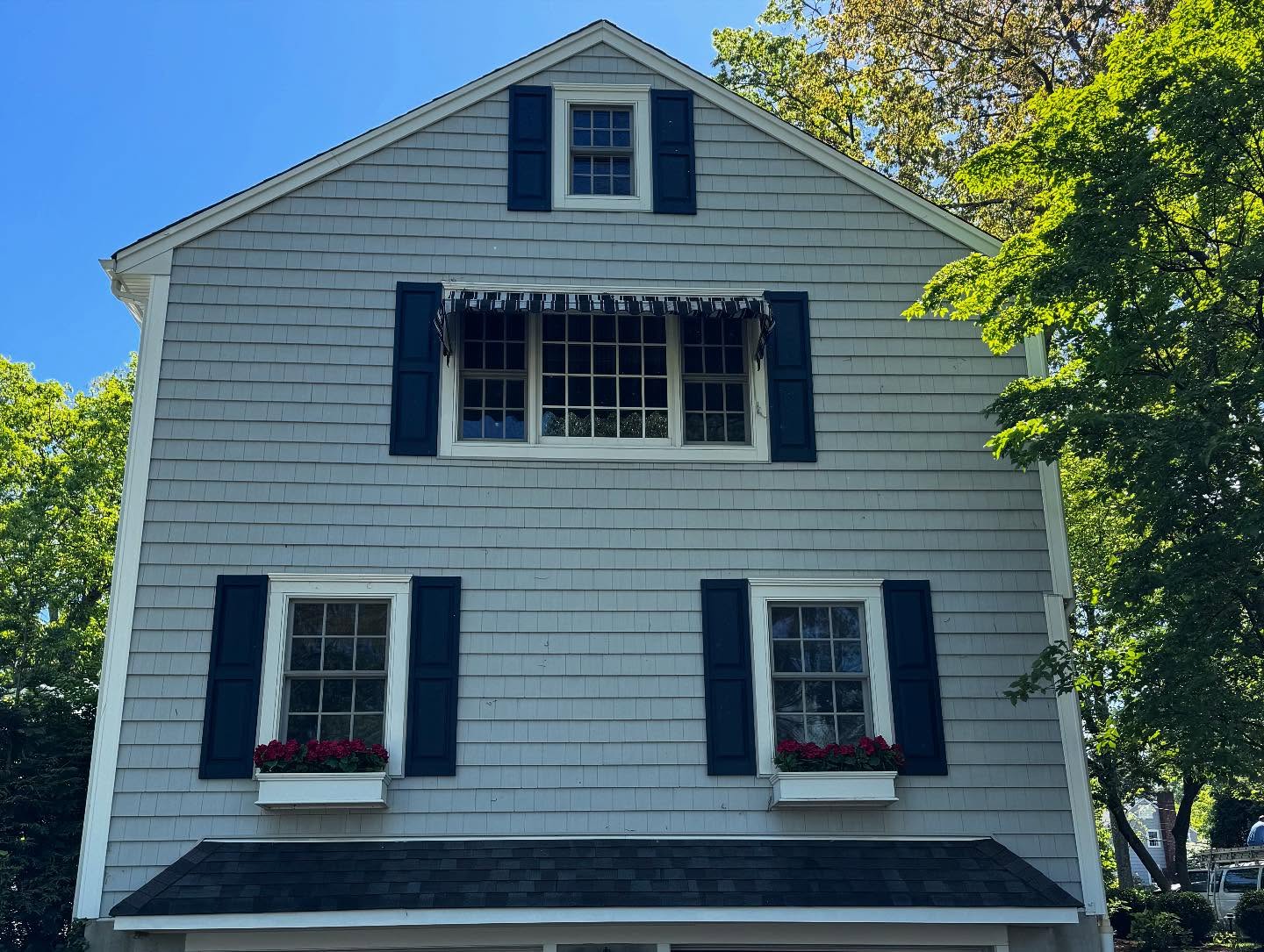
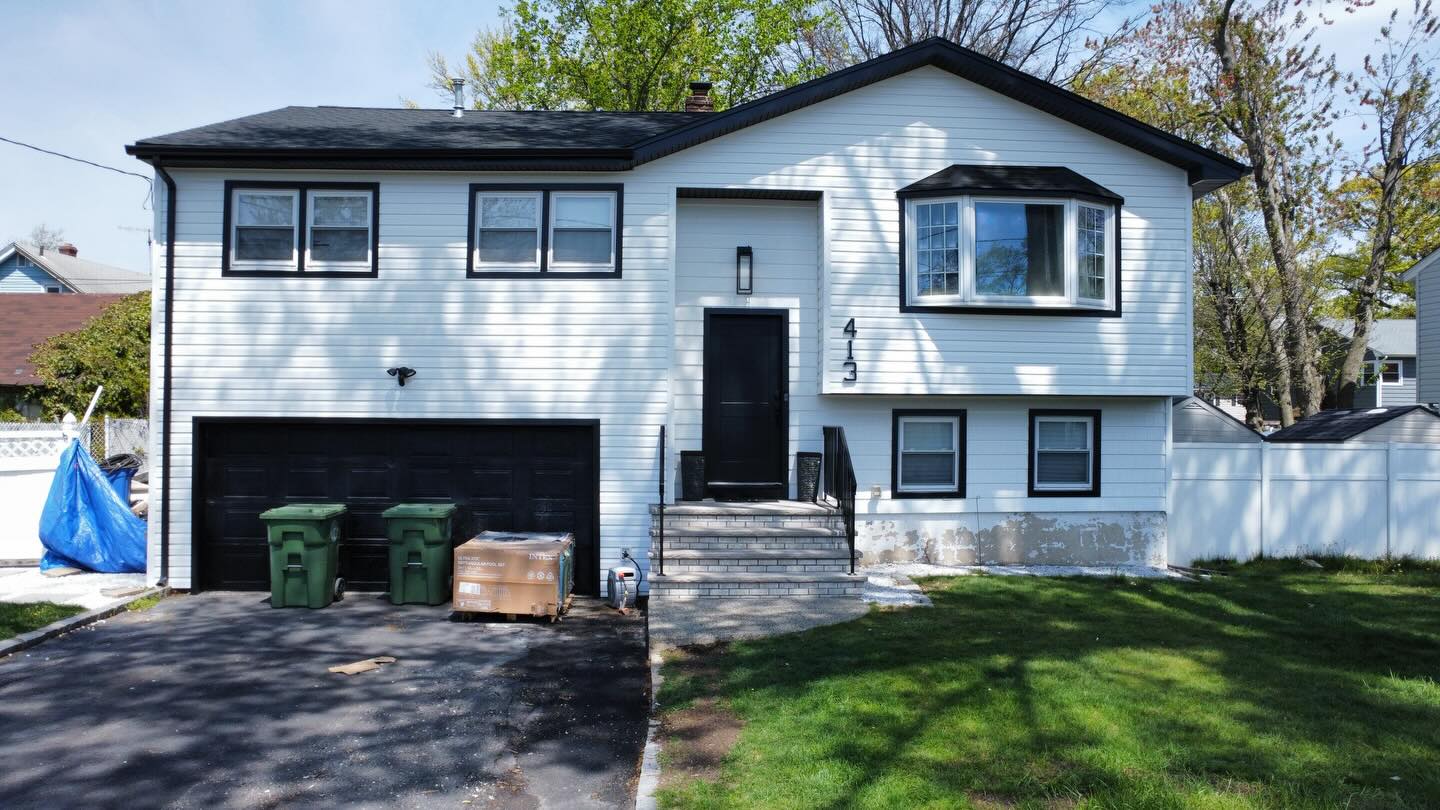
These are homes we have sided across northern New Jersey. Some were full replacements where the original material had given out everywhere at once. Others were partial jobs on one or two elevations. What they have in common is that the finished wall reads as one house rather than a repair with a new section stuck to it, which is most of the work on any siding project and almost none of what shows in the photo. Click any image to see it full size.
If you want to see more of what we have finished recently, our project galleries cover siding along with roofing, gutters and masonry.
"Great prices very clean neat professional happy to work with them will be recommended them for sure"
See our profile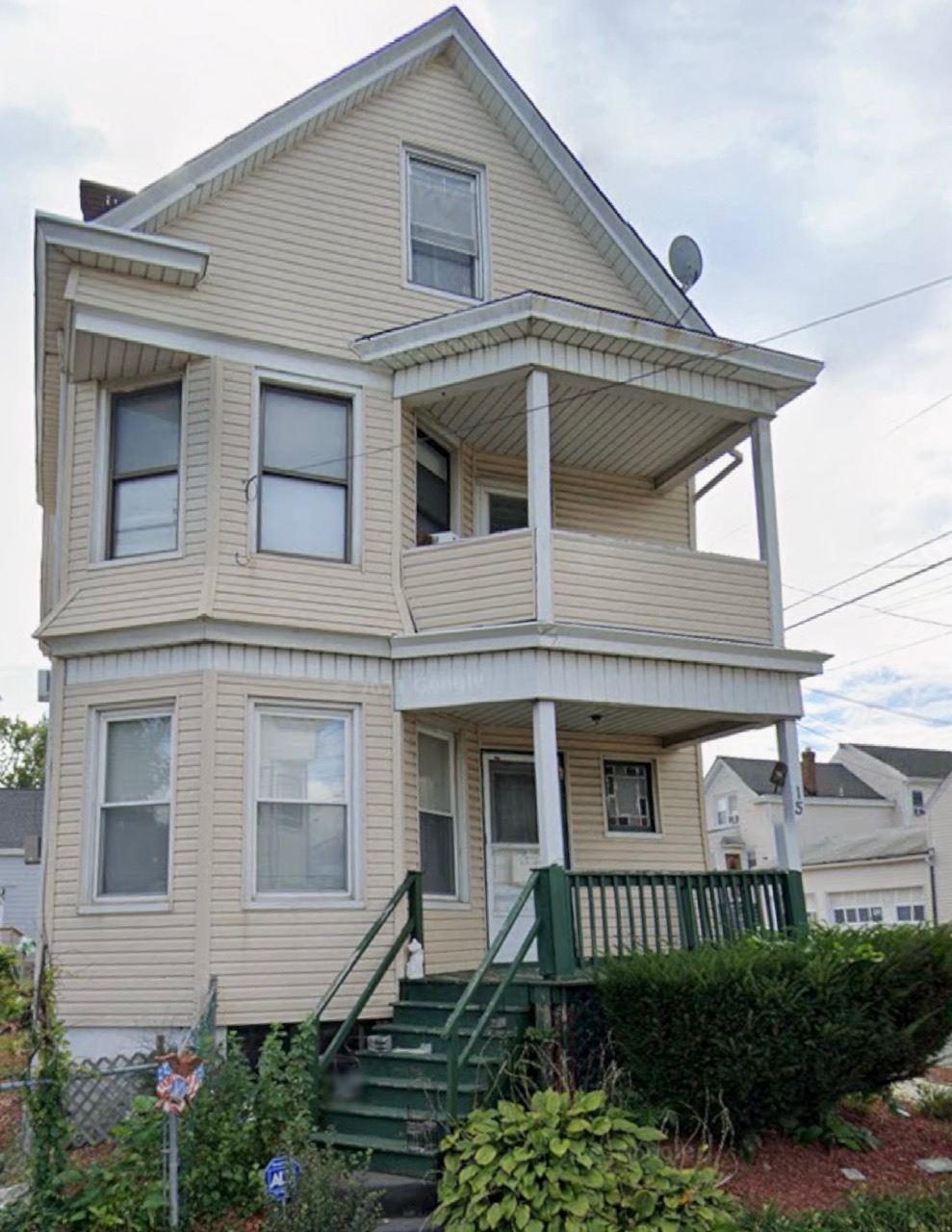


What Happens When You Call Us
No cost, no obligation, and no answer until we have actually looked at the wall.
Tell Us What You See
Describe the problem over the phone. Photos help if you have them, though they are not required.
We Come Out
We walk every elevation of the house, not only the wall you called about. The inspection is free.
We Check Underneath
Where there is any question, we open a section and look at the sheathing rather than guessing from outside.
You Get It in Writing
A written estimate with the scope spelled out. Where repair and replacement are both viable, you get both numbers.
We Set a Date
We tell you how long the job takes and we hold to it. Financing is available if you need it.
We Clean Up
Every piece of old siding, trim and debris leaves with us. The yard goes back the way we found it.
What Your Siding Material Tells You
Vinyl: The Easiest to Repair, the Hardest to Match
Vinyl is the most common siding in northern New Jersey and the most forgiving to work on. Individual panels unlock and slide out, so a skilled crew can swap a damaged run without touching the rest of the wall. Cracked panels, holes from a stray branch, and storm damage on one elevation are all straightforward repairs.
The problem is color. Vinyl fades measurably in the first several years, and manufacturers rotate their color lines regularly, so a fifteen-year-old wall rarely has an exact match available. When the repair is on a visible elevation, we often pull panels from the back of the house and put the new material there instead.
Fiber Cement: Durable, but Repairs Take Skill
Fiber cement holds up extremely well against freeze-thaw and lasts decades with basic maintenance. When it does fail, the failure is usually at the joints or the bottom course where water has been sitting, rather than across the field of the wall.
Repairs are more involved than vinyl because boards are nailed through and often overlap, so removing one means disturbing its neighbors. The material is also heavy and cuts create silica dust, which is a real reason not to treat this as a weekend project. Matching is usually easier than vinyl since fiber cement is painted rather than through-colored.
Wood and Cedar Shake: Watch for Rot at the Base
Cedar shake and clapboard look better than anything else on a colonial, and plenty of older Bergen County homes have it. The tradeoff is that wood is the only siding material that actively decays. Individual shakes and boards can be replaced one at a time, which makes small repairs simple.
What decides repair against replacement is where the damage sits. Rot at the top of a wall is usually a flashing or gutter problem that can be corrected. Rot along the bottom course, especially near grade, tends to mean sustained moisture that has already reached the sheathing, and that is a wall worth opening before quoting anything.
Aluminum: Usually a Replacement Conversation
Aluminum siding was widely installed here through the 1970s, so most of what is still standing is at or past the end of its intended life. It resists rot completely, which is a genuine advantage, but it dents on impact, chalks heavily as the finish breaks down, and the panels available today rarely match what was installed decades ago.
Dents can sometimes be pulled and a badly chalked wall can be cleaned and painted. When the damage covers more than a small area, though, most homeowners are better served putting the repair budget toward replacement, since the underlying material is not going to improve from here.
Stucco: Cracks Are the Signal to Investigate
Stucco is a masonry product rather than a panel system, so nothing about it comes off and goes back on. Hairline cracking is normal and largely cosmetic. Cracks wider than a credit card edge, bulging, or sections that sound hollow when tapped mean water has gotten behind the system and the substrate is compromised.
Stucco repair sits closer to masonry work than to siding installation, and the two need to be assessed together where a house has both. We handle either one, so a mixed exterior does not mean coordinating two contractors.
Siding Questions We Hear Most
It depends on the material and, more than most people expect, on the elevation. Vinyl and aluminum on a shaded north wall can outlast the same material on a south wall by years, because sun and heat cycling do most of the aging. Rather than working from a number, look at what the walls are actually doing. Siding that is still flat, sealed at the seams and firm to the touch is doing its job regardless of the install date.
Yes, and we do it regularly. Single-elevation replacement makes sense when one wall has taken the weather and the others are sound. The one caution is color: a newly sided wall next to three weathered ones will read as different, especially in direct sun. On a side or rear elevation that usually does not matter. On the front of the house it often does, and we will say so before you decide.
Sudden damage from a covered event, such as a storm, falling tree or fire, is often covered. Damage from age, gradual moisture or deferred maintenance generally is not. The distinction your adjuster is looking for is whether a specific event caused it. We document what we find and provide written scope and photos, which is what carriers want to see, and we can talk through the process with you.
A typical single-family replacement runs a few days to about a week, driven by the size of the house, how many corners and gables it has, and what we find once the old material comes off. Repairs are usually a single day. We give you a specific timeframe with the estimate and we tell you if anything changes it.
It is worth considering, because gutters come down for a siding job anyway and reinstalling old ones costs labor you have already paid for once. It also matters functionally: overflowing gutters are one of the most common causes of the siding damage we get called about. If yours are sagging, leaking at the seams or spilling over the front, doing both together usually costs less than doing them a year apart.
No. Siding work happens entirely outside, so plenty of our customers are at work while we are on site. We do like to walk the job with you at the start and at the finish, and we will reach out if we find something behind the old siding that changes the scope. Nothing gets added to the job without your approval.
Our next door neighbor had a fire in their shed. The fire was so intense that it melted our siding. I called Dynamic they came gave us a good price and advised it will take one day to do it. Sure enough it was done as said. I would recommend them in a heartbeat.
We Also Provide
Siding Repair & Installation
Repair, partial replacement and full re-siding for homes across Bergen County, with free inspections and written estimates.
Learn MoreMasonry
Stucco, brick and stone work, including the repairs that often come up alongside a siding project on a mixed exterior.
Learn MoreGutter Repair
Repair, replacement and seamless gutter installation. Fixing overflow is the cheapest way to protect new siding.
Learn MoreWhat You Get Working With Us
Family-Owned and Operated
You deal with the people whose name is on the company. That is also why we will not sell you a job you do not need.
Fully Licensed and Insured
Current licensing and insurance on every job. We are glad to provide documentation before work begins.
Free Inspections and Estimates
We look at the whole exterior at no cost and put the findings in writing, whether or not you hire us.
Financing Available
A full re-side is a real expense. Financing options are available so timing does not force a patch job.
Debris Removed When We Finish
Old siding, trim, fasteners and packaging all leave with us. Cleanup is part of the job, not an add-on.
5-Star Rated on Google
Our reviews come from homeowners across Bergen County and the surrounding areas. Read them yourself.
Areas We Serve
Let Us Take a Look at the Wall
The inspection is free and there is no obligation attached to it. If a repair will hold, that is what we will quote. If it will not, you will see why for yourself.
Reach Out
Call us or send a message with what you are seeing on the house.
Free Inspection
We walk the full exterior and check what is behind the siding where it matters.
Written Estimate
You get the scope, the price and a start date. Financing is available.