7 Signs Your Chimney Needs Repair Before Winter
Your Chimney Takes the Worst of the Weather
A chimney is the only masonry on your house with no roof over it. Rain hits it from every side, snow sits on top of it, and there is nothing above it to shed water somewhere else. In a New Jersey winter, the temperature crosses freezing dozens of times between November and March. Water soaks into the mortar and the face of the brick during the day, freezes overnight, expands, and pushes the material apart from the inside. Do that thirty or forty times a season, for twenty seasons, and something has to give.
The good news is that a chimney gives plenty of warning before it becomes a real problem. Almost every sign below can be spotted from the ground with a pair of binoculars, or from inside your own living room. Catching it early is the difference between repointing a few courses of brick and rebuilding the whole stack from the roofline up.
Book a Free Inspection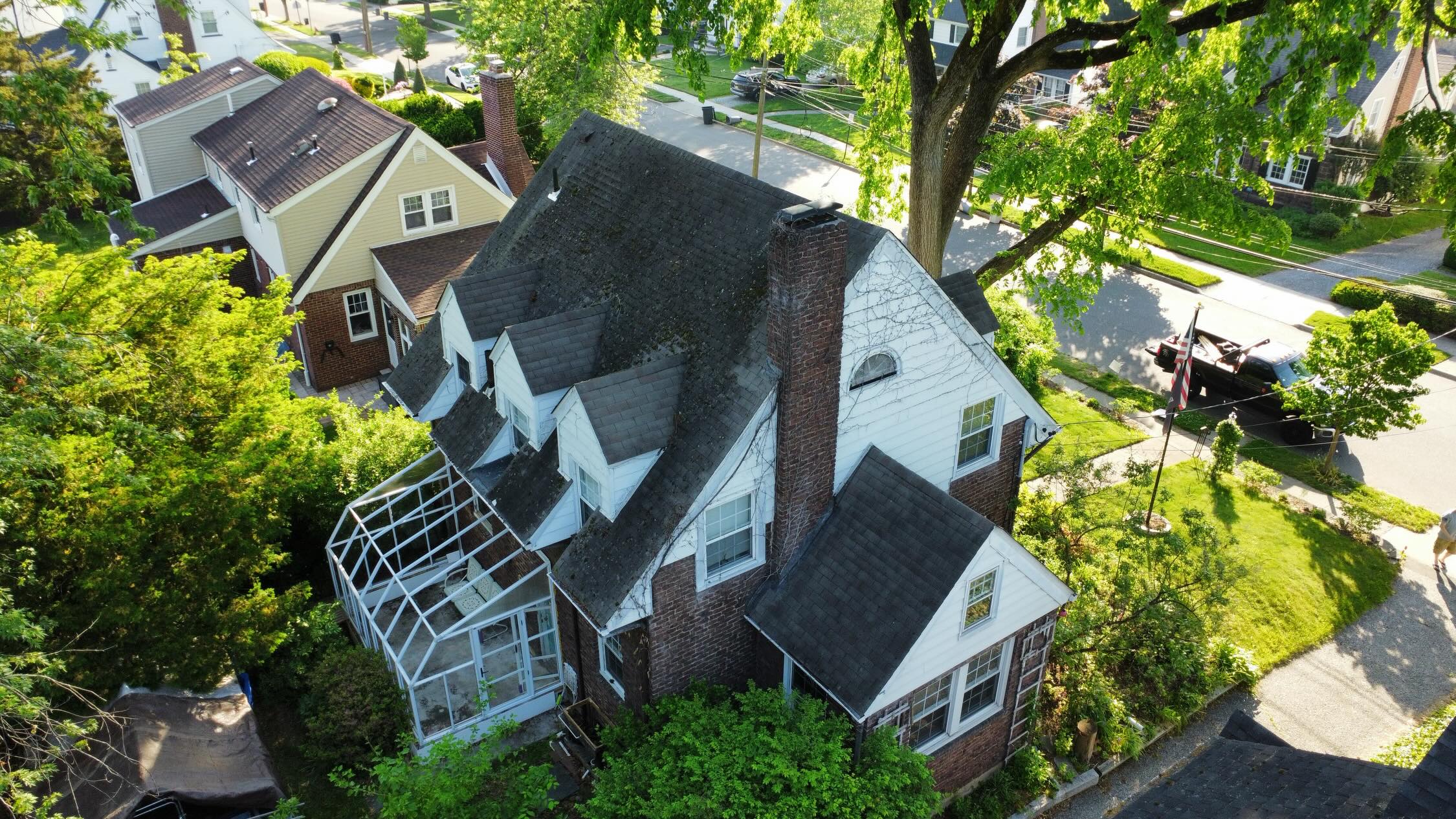
Seven Things Your Chimney Is Trying to Tell You
These are the signs we find most often on New Jersey homes, roughly in the order they show up. The first four are visible from outside. The last three usually appear indoors, which means water has already been getting in for a while.
Signs 1 & 2: The Masonry Itself
Start with the mortar joints. Healthy mortar sits nearly flush with the face of the brick. Failing mortar recedes, leaving shadowed gaps you can see from the driveway, and it turns sandy enough that a key or a screwdriver will dig it out with almost no pressure. If you are finding grit and small chips of mortar on the roof or in the gutters below the chimney, the joints are already open and water is getting behind the brick.
The second sign is spalling. Water that soaks into a brick and then freezes pushes the face of the brick off in flakes, leaving a pitted, crumbly surface or a shallow crater where the smooth face used to be. A handful of spalled bricks near the top is normal wear and gets patched. When spalling runs down several courses, the brick has lost its weather skin and repointing alone will not save it. That is the line between a repair and a rebuild, and it is worth knowing which side of it you are on before winter, not after.
"Pleasant experience with the staff, the chimney work was excellent and done in a timely manner and I will definitely use the company again and recommend them too."
See our profile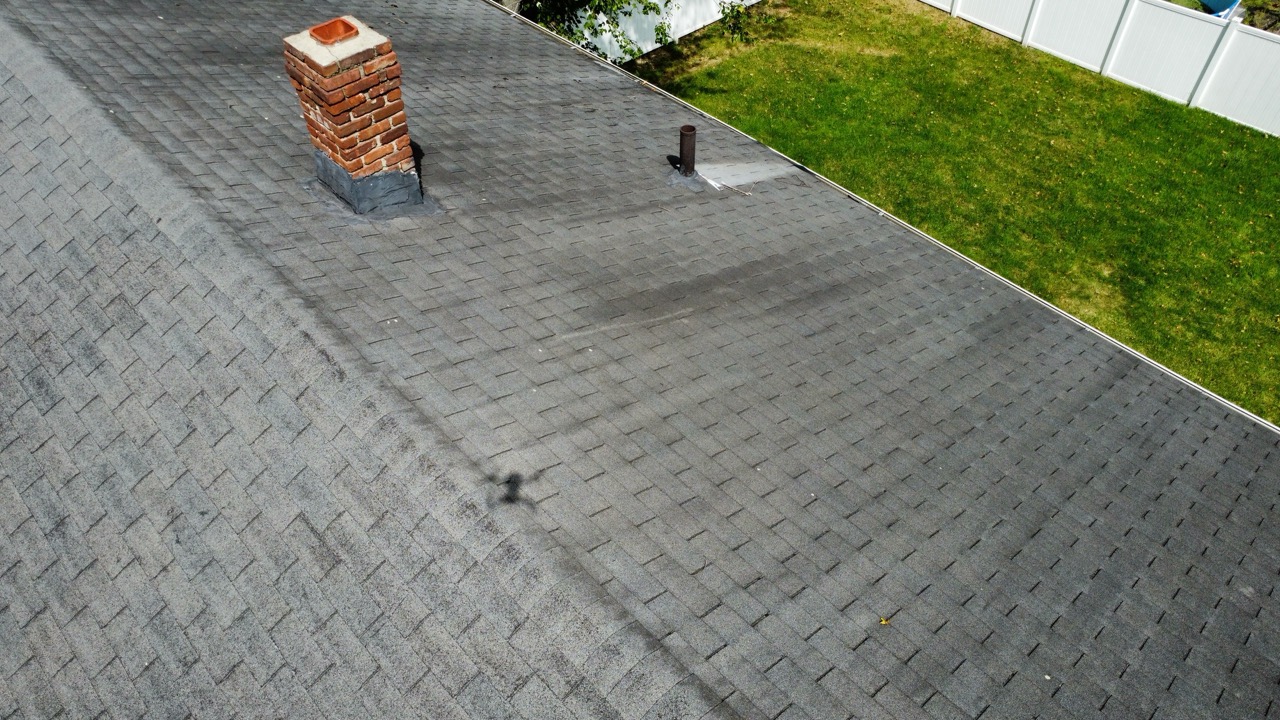
Signs 3 & 4: The Top of the Stack
The crown is the sloped slab of concrete or mortar covering the top of the chimney, around the flue. Its entire job is to shed water away from the brick underneath. It is also the part of the chimney nobody ever looks at. Crowns crack because they are thin, exposed, and poured over a masonry structure that moves slightly with temperature. A hairline crack is a two-hour repair with a proper crown sealant. A crack you can slide a coin into is funneling water directly into the core of the chimney, where it will work its way down through the brick and out onto your ceiling.
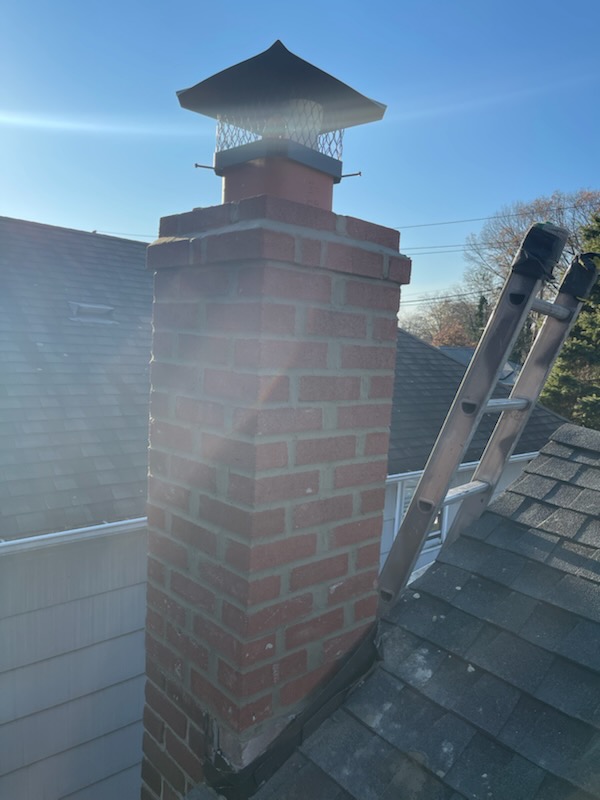
The cap is the metal hood over the flue opening, usually with a mesh screen. Missing or rusted-through caps are common on older Bergen County homes, and the consequences are immediate: rain falls straight down the flue, birds and squirrels nest inside, and downdrafts push cold air and smoke back into the house. If you can see straight into an open flue from the ground, or you are hearing scratching from the fireplace, that is your sign. A cap is one of the cheapest parts of a chimney and prevents some of the most expensive damage. Our guide to chimney cleaning covers what else builds up inside an uncapped flue.
"Knowledgeable and friendly. Came quickly to repair roof issue."
See our profileSign 5: Stains That Aren't the Roof's Fault
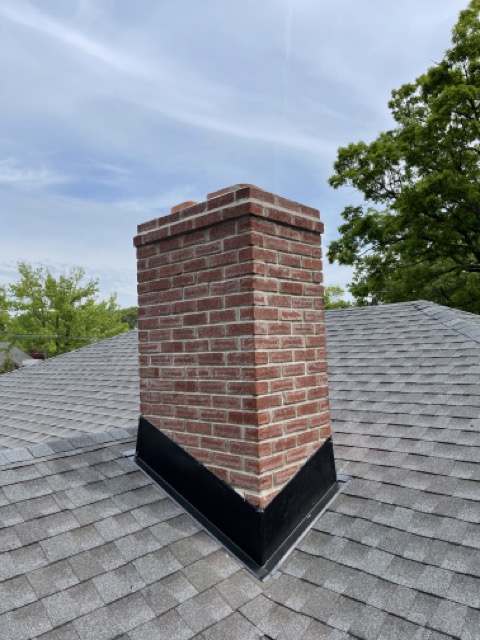
Where the chimney passes through the roof, two layers of metal do the waterproofing. Step flashing tucks under the shingles along each side, and counter flashing is set into a groove cut in the mortar joints and folded down over the top of it. Both are supposed to move independently as the roof and the chimney shift. When the mortar holding the counter flashing gives out, the metal pulls loose, and water runs down the outside of the chimney and straight into the roof deck.
The tell from the ground is tar. If you see black roofing cement smeared around the base of your chimney, someone has already tried to stop a leak the cheap way, and that patch has a shelf life of a season or two. Inside, look for brown rings on the ceiling near the chimney chase, damp insulation in the attic on the chimney side, or a stain that appears only after wind-driven rain. These get diagnosed as roof leaks constantly. Because we handle both trades, the same crew that inspects your chimney can price the roof repair in Bergen County if the deck underneath has taken damage.
"This company is the best…in promptness, workmanship, and fair prices. I can't thank them enough for helping me on a Saturday night when a gutter busted & water was coming into a window."
See our profile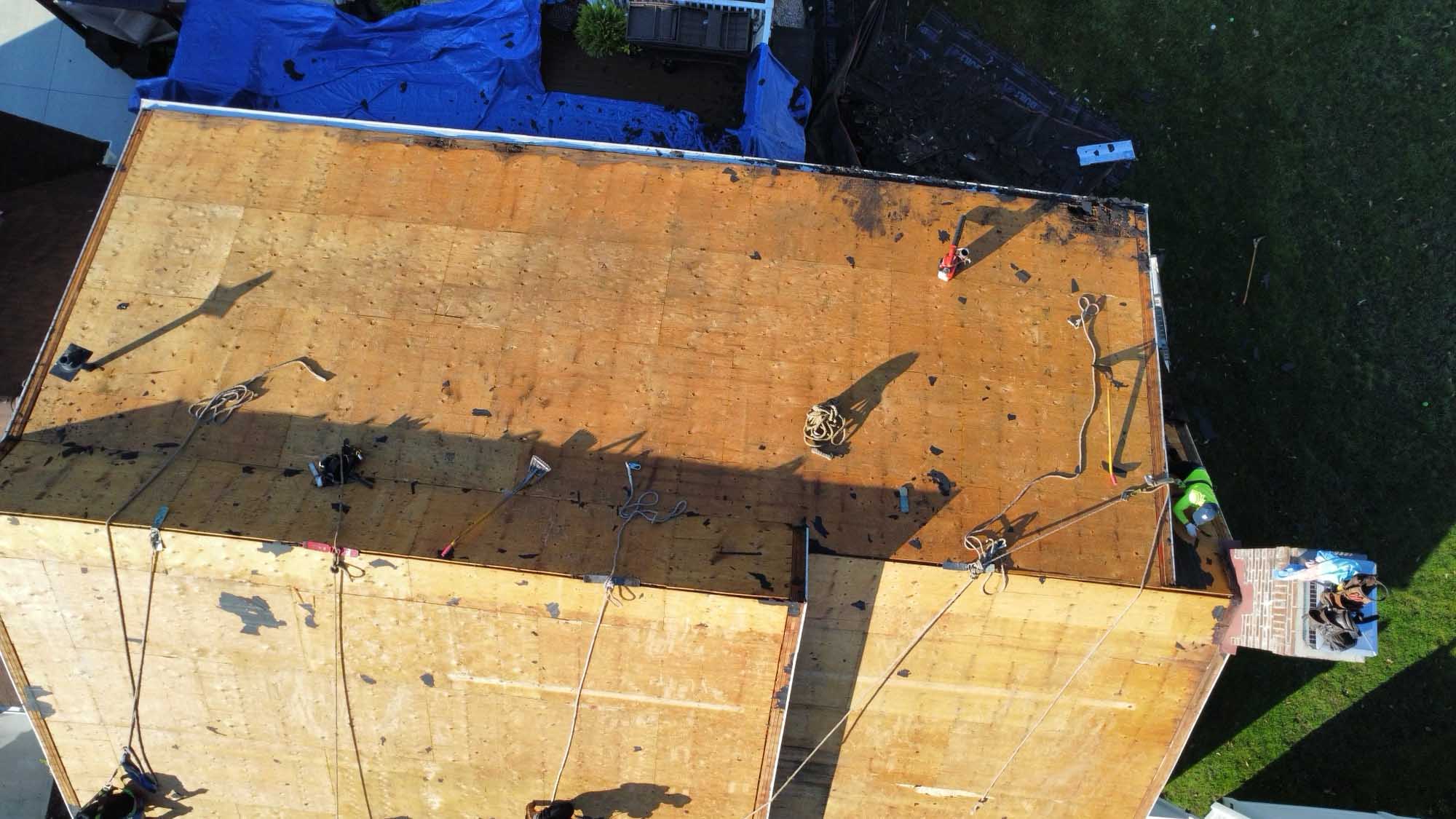
Signs 6 & 7: White Staining and Rust
White chalky streaks on the outside of the brick are called efflorescence. It is mineral salt carried out of the masonry by water moving through it, and it dries on the surface as the water evaporates. Scrubbing it off accomplishes nothing, because the staining is a symptom. It means water is traveling inside the chimney wall, and it usually shows up on the north and west faces first.
Inside the house, the equivalent signs are rust and damp. A damper that squeals, sticks, or will not seal is rusting, and dampers rust for exactly one reason. Same with rust stains on the firebox, a musty smell from the fireplace on humid days, or a hollow, ticking drip somewhere in the flue after rain. None of these are cosmetic. They are all telling you the water path is already open, and every one of them is cheaper to fix in September than in March. If the masonry damage extends past the chimney to steps, walls, or piers, our masonry repair crew handles that too.
"Easy to work with. Finished the job within the time frame they said they would. Price was good. Very thorough cleanup."
See our profileWe check the mortar joints, brick faces, crown, cap, and flashing, then look at the ceiling and attic on the chimney side for anything already getting through. You get told what needs doing now, what can wait, and what it costs, in writing. The inspection and the estimate are both free.
What a Repaired Chimney Looks Like
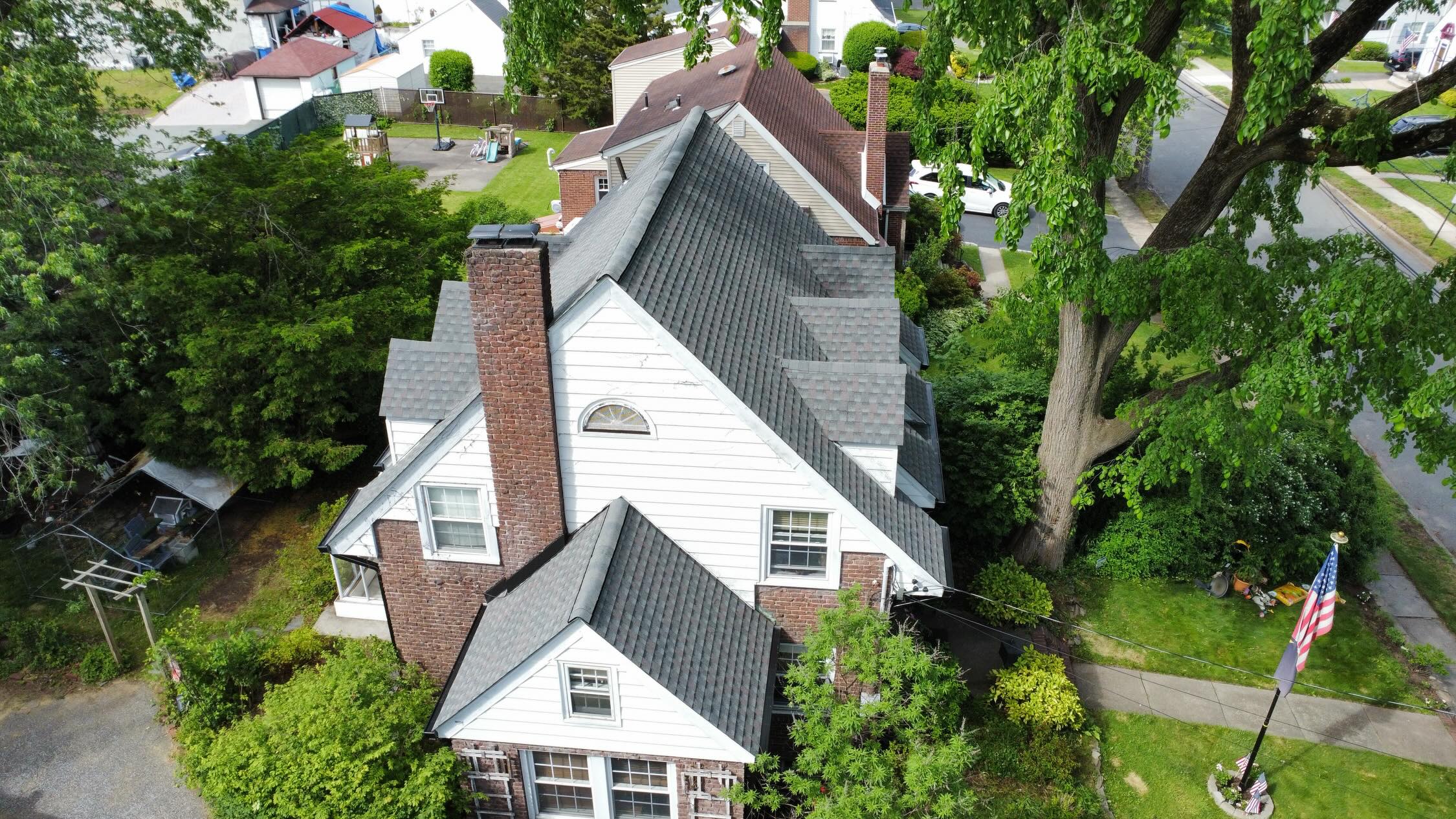
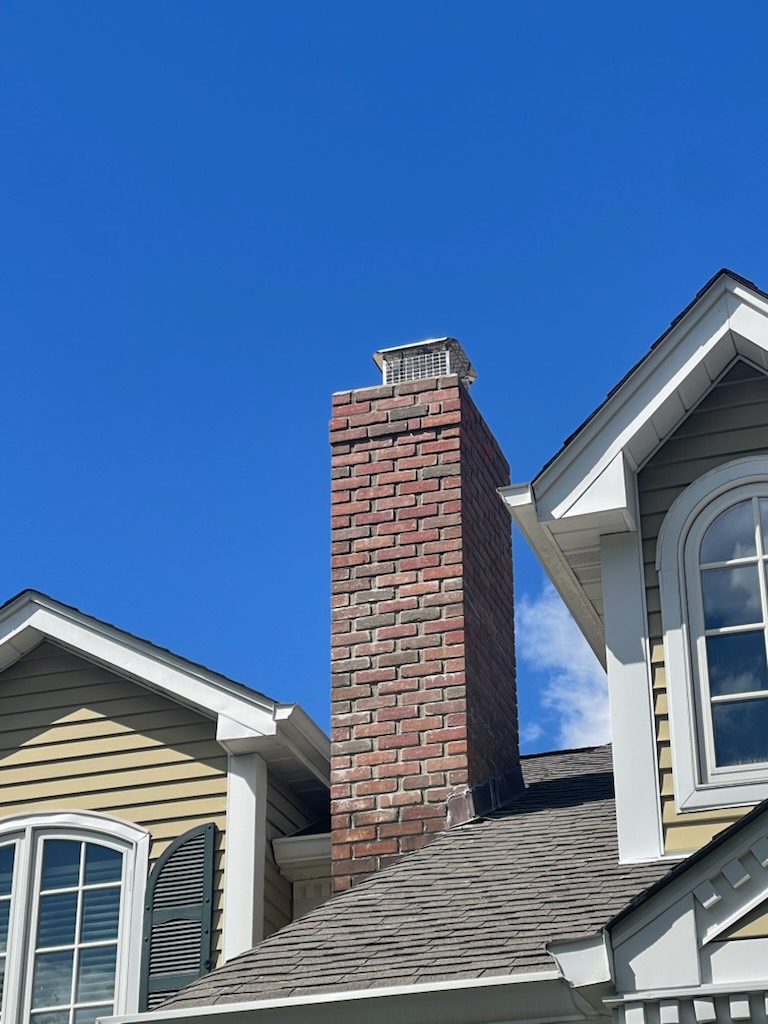
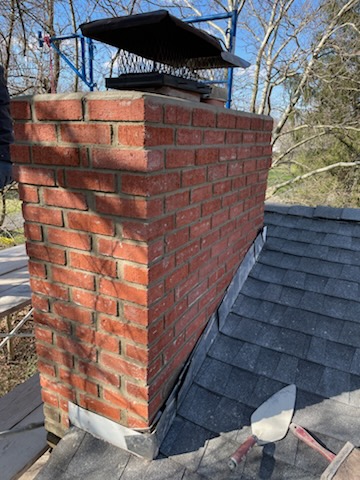
These are chimneys we have repaired and rebuilt on New Jersey homes: joints repointed to match the original mortar, crowns re-poured with a proper overhang and drip edge, new caps set over open flues, and fresh flashing woven into the shingle courses so the seam is watertight instead of tarred over. Some of these started as a small crack a homeowner noticed from the driveway. A few had gone far enough that the top several feet came down and went back up. Click any photo to see it full size, and see the rest of our work on the project galleries.
"They are so professional and careful you would be amiss if you do not give them a call. I would recommend them in a heartbeat."
See our profile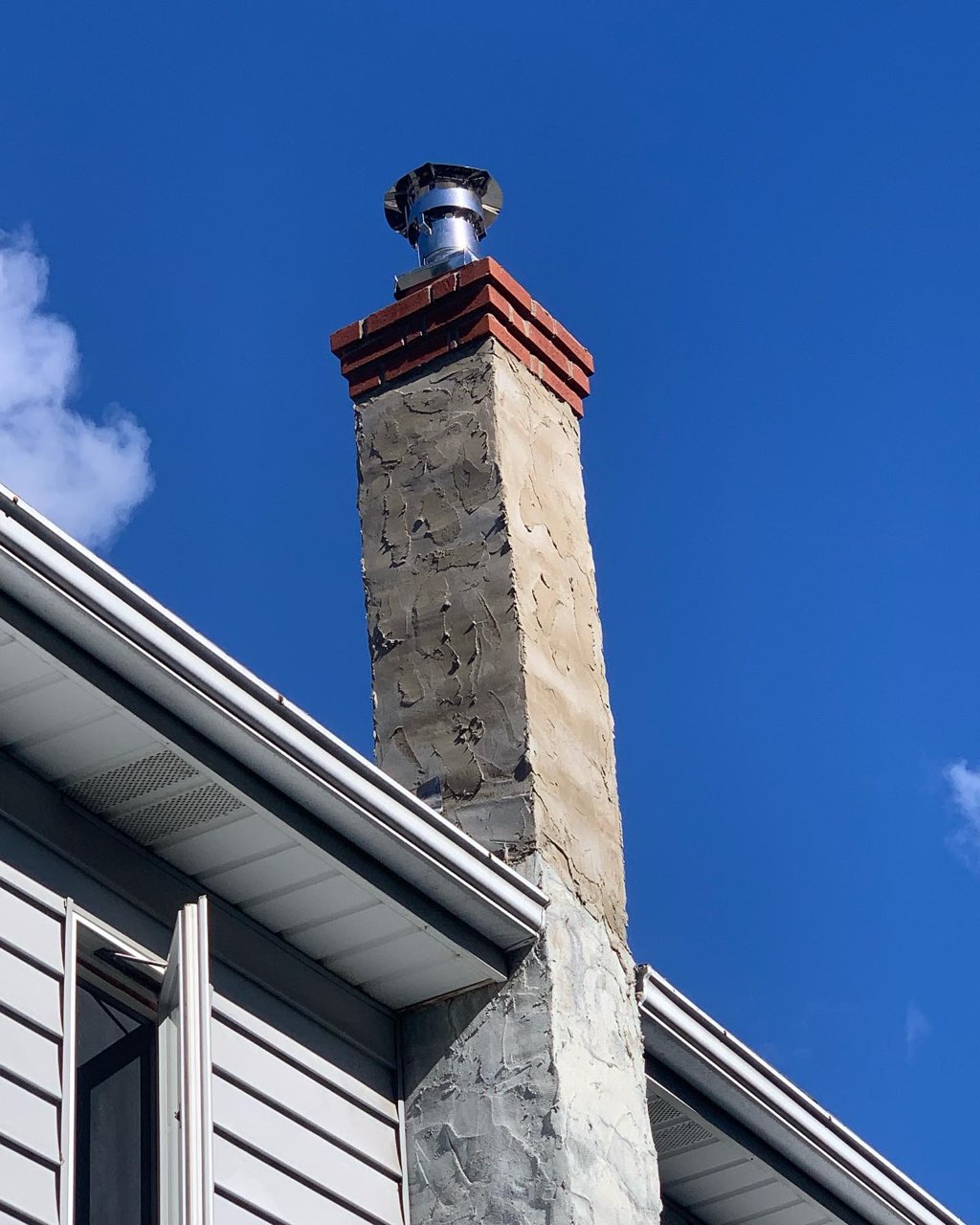


From First Call to Final Cleanup
No surprises, no pressure, and nothing starts until you have seen the price in writing.
You Tell Us What You See
Describe the crack, the stain, or the piece of mortar you found in the gutter. Photos help but are not required.
We Inspect, Free
We get on the roof and check the joints, brick, crown, cap, and flashing, then look inside for anything already getting through.
You Get a Written Scope
A clear estimate covering what needs doing now, what can wait a season, and what each part costs.
We Schedule the Work
You get a start date and a realistic duration. Financing is available if the repair is a larger one.
We Do the Repair
Repointing, crown work, caps, flashing, or a rebuild from the roofline up, matched to the existing masonry.
We Clean Up and Haul Off
Mortar debris, old flashing, and packaging all leave with our truck. Your yard looks like we were never there.
Chimney Repair Questions We Get Asked
It comes down to whether the brick itself is still sound. If the mortar has failed but the brick faces are intact, repointing the open joints solves it. If the brick is spalling across multiple courses, has lost its face, or the stack has shifted, mortar alone will not hold and the affected section gets taken down and rebuilt. We tell you which one you are looking at during the free inspection, and we will not sell you a rebuild for a repointing job.
Yes. Chimney and flashing work is done independently of the roof all the time, and we lift and re-weave the surrounding shingles to install new flashing properly. That said, if your roof is near the end of its life anyway, doing both at once saves you paying twice to open the same seam. We will tell you honestly which situation you are in.
Serious enough to get looked at promptly. A visible lean, a gap opening between the chimney and the siding, or cracks running in a stair-step pattern through the mortar usually point to a footing or structural problem rather than surface weathering. Stop using the fireplace until it has been inspected, and call us so we can assess it in person.
Yes, and this catches a lot of people out. The masonry weathers whether you light a fire or not, and an unused flue is more likely to be uncapped, open to rain, and full of nests. Chimney industry guidance is an inspection once a year regardless of use. Water damage does not care whether the fireplace works.
A cap installation or crown seal is usually a few hours. Repointing a stack or replacing flashing is typically one day. A rebuild from the roofline up generally runs one to three days depending on height and access, plus cure time for the mortar. You get a duration in writing with the estimate, and we finish within the window we quote.
It depends on the cause. Sudden damage from a storm, wind, or a fallen limb is often covered, while gradual deterioration from age and weather generally is not, since insurers treat that as maintenance. If a storm brought your chimney down or knocked the cap off, document it with photos and call us. We assist with insurance claims and can put together the inspection documentation your adjuster will ask for.
If I could give 10 stars I would. Florio and his team do not gloss over or cover up issues that they find just to get the job done. When there were issues (and there were several) it was brought to our attention immediately and they fixed/corrected them before moving on even though it kept putting them behind schedule.
We Also Provide
Chimney Repair
Repointing, crown and cap work, flashing, and full rebuilds for chimney repair in Bergen County and across North Jersey.
Learn MoreMasonry
Brick and stone steps, walkways, patios, and masonry repair when the damage runs past the chimney.
Learn MoreRoof Repair
Leak tracing, flashing, and shingle repair from a licensed roofing contractor in Bergen County, NJ.
Learn MoreWhat You Get With Dynamic Home Improvements
Licensed and Insured
Fully licensed and insured in New Jersey, for residential and commercial work alike.
Family-Owned and Operated
Based in Franklin Lakes and run by the same family that shows up on your roof. Integrity is the whole business model.
Free Inspections and Estimates
We look, we measure, we price it, and you decide. There is no charge for finding out where you stand.
Financing Available
Larger repairs and rebuilds can be financed, so a failing chimney does not have to wait for the right month.
We Take the Mess With Us
All construction debris is removed when the job is done. Homeowners mention our cleanup more than anything else.
5-Star Google Rating
Chimneys, roofs, gutters, siding, and masonry across Bergen County and the surrounding areas.
Have It Looked At Before the First Freeze
If you spotted anything on this list, the inspection costs you nothing and the answer takes about half an hour. Waiting is the only expensive option.
Tell Us What You See
A crack, a stain, mortar in the gutter, or just a chimney nobody has checked in years.
We Inspect for Free
Mortar, brick, crown, cap, and flashing, checked from the roof and from inside.
You Get a Written Price
What needs doing now, what can wait, and what each part costs. Then it is your call.