Dynamic's Roofing FAQs
We Answer Your Frequently Asked Questions About New Jersey Roofing




Shingle Roofing FAQs
5.0
Why Choose Shingles for Residential Roofing?
Shingles are affordable, versatile, and easy to install—making them a top choice for residential roofs. They come in a wide range of colors and styles, require minimal maintenance, and perform well in most weather conditions. For homeowners looking for a balance of style, durability, and cost, shingles are a solid all-around option.
How Long Do Shingle Roofs Typically Last?
Most asphalt shingle roofs last between 20 and 30 years, depending on the quality of the materials, local weather conditions, and proper installation. With good maintenance, some high-quality shingles can even reach 35 years or more.
Are Asphalt Shingles a Good Option for New Jersey Weather?
Yes, asphalt shingles are well-suited for New Jersey’s climate. They handle a wide range of temperatures, resist wind and rain, and can even perform well in snowy conditions when properly installed and ventilated.
What Are the Signs My Shingle Roof Needs Replacing?
Common signs include cracked, curled, or missing shingles; bald spots from lost granules; consistent leaks or water stains inside your home; and a roof that’s over 20 years old. If you notice any of these, it’s time for an inspection.
How Do I Choose the Right Shingle Color for My Home?
Consider your home’s siding, trim, and style when picking a shingle color. Lighter colors reflect more heat and can make a home look larger, while darker colors absorb heat and add contrast. Look at samples in natural light to see how they really appear.
Are Asphalt Shingles Energy Efficient?
Yes, many modern asphalt shingles are designed with reflective technology that helps reduce heat absorption. This can improve your home’s energy efficiency and lower cooling costs during the summer.
Can Asphalt Shingles Be Recycled?
Asphalt shingles are one of the most commonly recycled roofing materials. Old shingles can be repurposed into pavement or other construction products, making them a more eco-friendly choice than you might expect.
Do Asphalt Shingles Require a Lot of Maintenance?
Shingle roofs require relatively low maintenance compared to other roofing materials. Regular inspections, cleaning debris from gutters, and replacing damaged shingles as needed are usually enough to keep them in good condition.
Are Asphalt Shingles Fire Resistant?
Most asphalt shingles carry a Class A fire rating—the highest available. This means they offer excellent resistance to the spread of fire, especially when properly installed over a fire-resistant underlayment.
What Warranty Options Are Available for Shingle Roofs?
Warranty options vary by manufacturer, but many asphalt shingles come with warranties ranging from 20 years to lifetime coverage. At Dynamic Home Improvements, we also provide a 10-year workmanship warranty for added peace of mind.
Metal Roofing for Homes FAQs
Why Choose Metal Roofing for Your Home?
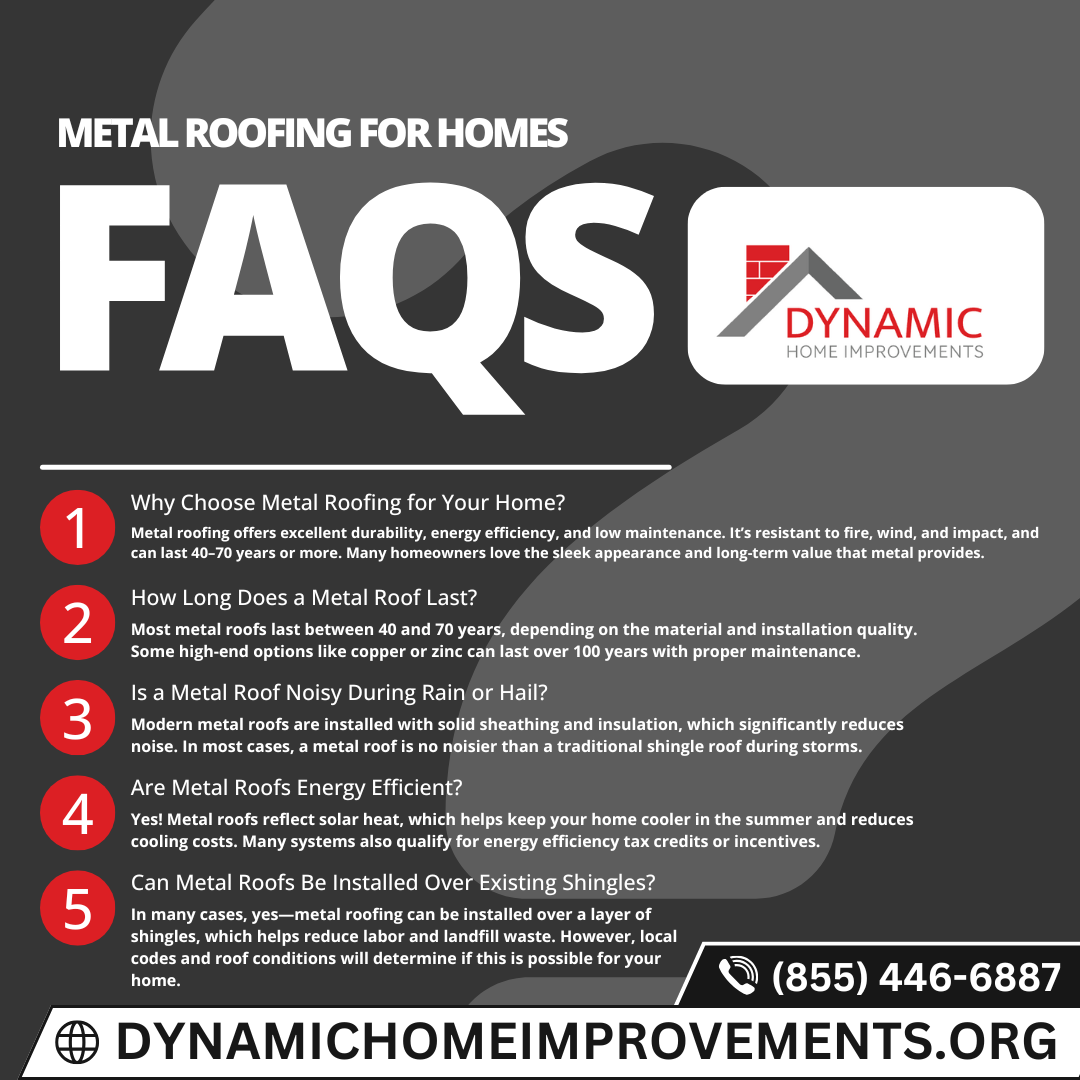
Metal roofing offers excellent durability, energy efficiency, and low maintenance. It’s resistant to fire, wind, and impact, and can last 40–70 years or more. Many homeowners love the sleek appearance and long-term value that metal provides.
How Long Does a Metal Roof Last?
Most metal roofs last between 40 and 70 years, depending on the material and installation quality. Some high-end options like copper or zinc can last over 100 years with proper maintenance.
Is a Metal Roof Noisy During Rain or Hail?
Modern metal roofs are installed with solid sheathing and insulation, which significantly reduces noise. In most cases, a metal roof is no noisier than a traditional shingle roof during storms.
Are Metal Roofs Energy Efficient?
Yes! Metal roofs reflect solar heat, which helps keep your home cooler in the summer and reduces cooling costs. Many systems also qualify for energy efficiency tax credits or incentives.
Can Metal Roofs Be Installed Over Existing Shingles?
In many cases, yes—metal roofing can be installed over a layer of shingles, which helps reduce labor and landfill waste. However, local codes and roof conditions will determine if this is possible for your home.
Residential Roof Repair FAQs
5.0
What Are the Most Common Residential Roof Repairs?
Common repairs include fixing leaks, replacing missing or damaged shingles, sealing flashing around chimneys or vents, and repairing areas with water damage or rot. Regular inspections can help catch small issues before they become costly problems.
How Do I Know If My Roof Needs Repair or Replacement?
If your roof has isolated damage like a few missing shingles or a minor leak, repairs may be enough. Widespread wear, sagging, or multiple problem areas could mean it’s time to consider a full replacement. A professional inspection is the best way to decide.
How Much Does Residential Roof Repair Usually Cost?
Roof repair costs vary based on the extent of the damage and the type of materials used. Minor repairs might cost a few hundred dollars, while more complex issues could run into the thousands. Most contractors offer free estimates to give you a clear idea before any work begins.
How Long Do Roof Repairs Take?
Most residential roof repairs can be completed in a few hours to a single day, depending on the scope of the work. More involved repairs, like structural fixes or large leaks, might take longer. Weather conditions can also impact the timeline.
Should I Try to Repair My Roof Myself?
While some homeowners attempt small fixes, roof repair can be dangerous without proper safety gear and experience. DIY repairs may also void warranties or cause more damage if not done correctly. It’s safest and most effective to hire a professional roofer.
Commercial Roofing FAQs
5.0
What Types of Commercial Roofing Systems Are Available?
Common commercial roofing options include TPO, EPDM, PVC, metal, and modified bitumen. Each has its pros and cons depending on the building’s size, structure, budget, and climate. We can walk you through the best solution for your facility’s needs.
How Long Does a Commercial Roof Typically Last?
The lifespan depends on the material and maintenance. TPO and EPDM roofs typically last 20–30 years, while metal and built-up roofing systems can last even longer. Regular inspections and timely repairs can extend the life of any commercial roof.
How Can I Minimize Downtime During a Roof Replacement?
We schedule work in phases, communicate clearly, and can work during off-hours when necessary. Safety and access planning ensure your business can stay operational during most commercial roofing projects with minimal disruption.
What Should I Budget for a Commercial Roof Replacement?
Costs vary based on square footage, materials, and access conditions. A typical range is $5 to $12 per square foot, but complex roofs or premium systems may cost more. We offer detailed proposals with options tailored to your facility and budget.
How Often Should a Commercial Roof Be Inspected?
We recommend inspecting your commercial roof at least twice a year—typically in spring and fall—as well as after major storms. Early detection of minor issues can prevent costly repairs and help extend the life of the roof system.
When to Repair Your Roof VS Replace Your Roof
5.0
What's the #1 mistake homeowners make with roof maintenance?
Waiting until there's a visible problem. Most homeowners don't think about their roof until water is dripping into their living room, but by that point, a small $200 fix has often turned into a $5,000 emergency. The biggest mistake is treating your roof as "out of sight, out of mind." Regular twice-yearly inspections—especially after major storms—catch issues early when they're cheapest and easiest to repair. Think of it as preventative care for your home's most important protective barrier.
How do I know if I need a repair or a full replacement?
It comes down to the "25-30% rule" and your roof's age. If damage affects less than 25-30% of your roof surface and your roof is under 15 years old, repairs are usually the smart choice. However, if you're dealing with widespread shingle deterioration, multiple leak sources, or your roof is approaching 20+ years old, replacement becomes more cost-effective than patching an aging system. A professional inspection can assess not just the visible damage, but the underlying condition of your underlayment and decking to help you make the right call.
Does regular maintenance really extend my roof's lifespan, or is that just contractor marketing?
It's absolutely true. A well-maintained asphalt shingle roof can reach or even exceed its 25-year expected lifespan, while a neglected roof might fail in 12-15 years. Simple maintenance—cleaning gutters, replacing damaged shingles promptly, ensuring proper attic ventilation, and addressing minor issues before they spread—can add 5-10 years to your roof's life. That's potentially $15,000-20,000 in replacement costs delayed through a few hundred dollars of annual upkeep.
What specific weather conditions in New Jersey are hardest on roofs?
New Jersey roofs face a perfect storm of challenges: freeze-thaw cycles in winter cause shingle expansion and contraction that loosens fasteners; ice dams force water backward under shingles; nor'easters bring high winds and driving rain that exploit any weaknesses; and humid summers promote algae and moss growth. Unlike regions with more consistent climates, NJ roofs endure extreme seasonal swings that accelerate aging. That's why roofs in our area need more frequent inspections than those in milder climates.
If I'm planning to sell my home in 3-5 years, should I invest in roof repairs or replacement now?
If your roof is showing visible wear but isn't actively leaking, investing in repairs or replacement before listing can significantly boost your sale price and speed. Buyers often walk away from homes with obvious roof issues, and those who don't will negotiate hard or request credits. A new or well-maintained roof can recoup 60-68% of its cost in increased home value and makes your property stand out in listings. Even if you're not selling immediately, addressing problems now prevents emergency situations that could derail a sale when you're ready to list.